
7 Common Gym Injuries and How to Prevent Them
- Orth-rem India
- May 16
- 3 min read

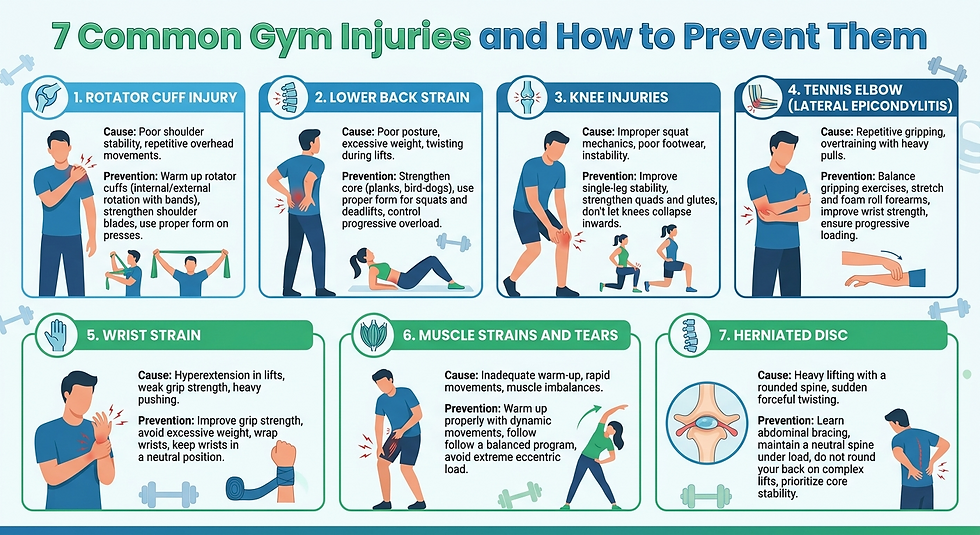
Gym injuries are one of the biggest reasons people lose consistency in fitness training. While strength training and resistance exercises improve muscle growth, endurance, and overall health, poor workout habits can place excessive stress on joints, muscles, tendons, and ligaments.
Hitting the gym can improve your strength, fitness, and overall health — but poor training habits can quickly lead to injuries.
Many gym injuries happen because of improper exercise form, ego lifting, lack of mobility, or insufficient recovery.
Understanding the most common gym injuries and how to prevent them can help you train safely and stay consistent with your fitness goals.
1. Rotator Cuff Injury
Cause:
Heavy bench presses, overhead pressing movements, poor shoulder stability, and excessive training volume.
Symptoms:
Shoulder pain
Weakness during pressing movements
Limited shoulder mobility
Discomfort when lifting the arms overhead
Prevention:
Warm up the shoulders properly before upper body workouts
Avoid excessive weight during pressing exercises
Strengthen shoulder stabilizer muscles
Maintain controlled lifting mechanics
Avoid flaring the elbows excessively during bench presses
2. Lower Back Strain
Cause:
Improper deadlift or squat form, weak core stability, and excessive spinal loading.
Symptoms:
Lower back tightness
Muscle spasms
Pain during bending or lifting
Reduced mobility
Prevention:
Maintain a neutral spine during compound lifts
Strengthen core muscles
Avoid rounding the lower back
Reduce ego lifting
Prioritize technique over weight progression
3. Knee Injuries
Cause:
Poor squat mechanics, muscle imbalances, repetitive stress, and excessive training load.
Symptoms:
Knee pain during squats or lunges
Swelling
Joint instability
Discomfort during movement
Prevention:
Keep knees aligned with toes during squats
Improve hip and ankle mobility
Strengthen quadriceps and hamstrings
Avoid locking the knees during exercises
Increase training intensity gradually
4. Tennis Elbow (Lateral Epicondylitis)
Cause:
Repetitive pulling exercises, excessive gripping, and poor wrist positioning.
Symptoms:
Pain around the outer elbow
Weak grip strength
Forearm tightness
Discomfort during pulling movements
Prevention:
Use proper wrist alignment during exercises
Reduce excessive gripping tension
Avoid sudden increases in training volume
Improve forearm mobility and flexibility
Allow sufficient recovery between workouts
5. Wrist Strain
Cause:
Poor wrist positioning during pushing exercises and excessive joint extension under heavy loads.
Symptoms:
Wrist pain
Inflammation
Joint stiffness
Pain while supporting weight
Prevention:
Maintain a neutral wrist position
Improve wrist mobility
Avoid collapsing the wrists during presses
Use wrist wraps if necessary
Reduce unnecessary training load
6. Muscle Strains and Tears
Cause:
Explosive movements, poor warm-ups, fatigue, and lifting beyond muscular capacity.
Symptoms:
Sudden sharp pain
Swelling
Bruising
Muscle weakness
Limited movement
Prevention:
Warm up before training
Progress weights gradually
Avoid uncontrolled repetitions
Allow adequate recovery
Stop training when severe pain occurs
7. Herniated Disc
Cause:
Excessive spinal compression, poor lifting mechanics, and heavy compound lifts with improper posture.
Symptoms:
Lower back pain
Tingling sensations
Numbness
Pain radiating into the legs
Prevention:
Maintain proper spinal alignment
Avoid excessive spinal flexion under load
Strengthen the core and stabilizer muscles
Add lower back supporting belts
Reduce training volume when fatigued
Focus on controlled repetitions
Why Do Gym Injuries Happen?

Most workout injuries are caused by poor training habits rather than exercise itself.
Common causes include:
Ego lifting
Poor exercise technique
Skipping warm-ups
Inadequate recovery
Weak stabilizer muscles
Limited mobility
Excessive training volume
Fatigue-related form breakdown
Many lifters mistake heavy lifting for effective training, but uncontrolled movement patterns often increase injury risk without improving results.
General Tips to Prevent Gym Injuries

Warm Up Properly
Dynamic warm-ups improve blood flow, joint mobility, and muscular activation before training.
Focus on Technique
Proper biomechanics reduce stress on joints, tendons, and connective tissues.
Avoid Ego Lifting
Progressive overload should be controlled and gradual.
Improve Mobility
Better hip, ankle, shoulder, and thoracic mobility can significantly improve movement quality.
Prioritize Recovery
Rest and sleep are essential for muscle repair and injury prevention.
Listen to Pain Signals
Sharp or persistent pain should never be ignored.
When Should You Seek Medical Help?
You should consider professional evaluation if you experience:
Persistent joint pain
Swelling
Numbness or tingling
Reduced mobility
Weakness during movement
Pain that worsens over time
Early intervention may help prevent long-term damage and speed up recovery.
Final Thoughts
Gym injuries are often preventable with proper training habits, controlled progression, and attention to exercise technique.
Building strength should never come at the cost of joint health or long-term mobility. Smart training, adequate recovery, and proper biomechanics are the foundation of sustainable fitness progress.
The goal is not simply to lift heavier weights it is to train consistently without breaking down the body in the process.


Comments