
Can Bone-on-Bone Knee Pain Be Managed Without Surgery?

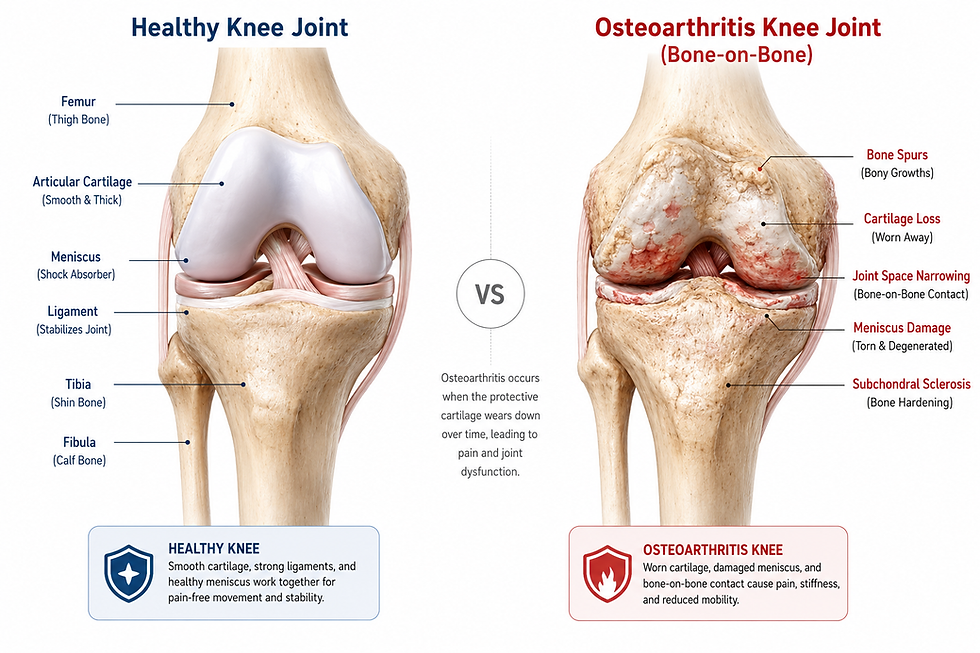
When someone hears the phrase "bone-on-bone knee," it's easy to assume that surgery is the only option left. The term itself sounds alarming, and it often brings worries about losing mobility, living with constant pain, or needing an immediate knee replacement.
The reality is more nuanced.
Many people with advanced knee osteoarthritis—often described as "bone-on-bone"—can manage their symptoms successfully for months or even years without surgery. The right approach depends on understanding what the diagnosis actually means, how symptoms affect daily life, and which non-surgical strategies are most appropriate for an individual's condition.
This article explains what bone-on-bone knee pain is, how it's diagnosed, and the evidence-based options that may help reduce pain, improve function, and support an active lifestyle.
What Does "Bone-on-Bone" Knee Pain Actually Mean?
The knee joint is covered with smooth cartilage that allows the bones to glide over one another during movement. In osteoarthritis, this cartilage gradually wears away. As the condition progresses, the protective cushioning becomes thinner, and the joint space visible on X-rays narrows.
When very little cartilage remains, healthcare professionals may describe the joint as "bone-on-bone." This term usually refers to severe cartilage loss seen on imaging rather than the bones literally grinding together all the time.
An important point is that X-ray findings and pain don't always match.
Some people with significant cartilage loss experience only mild discomfort, while others with less visible joint damage may have considerable pain. That's because pain is influenced not only by cartilage loss but also by inflammation, surrounding muscles, ligaments, joint lining, activity level, and individual pain sensitivity.
Common Symptoms
Bone-on-bone knee osteoarthritis may cause:
Pain during climbing stairs, walking or standing for long periods
Morning stiffness that improves with gentle movement
Swelling around the knee
Grinding, clicking, or crackling sensations
Reduced range of motion
Difficulty getting up from a chair
Knee instability or the feeling that the knee may "give way"
Symptoms often develop gradually and may fluctuate. Many people experience periods when the knee feels relatively manageable, followed by flare-ups triggered by increased activity or prolonged standing.
How Is Bone-on-Bone Knee Arthritis Diagnosed?
Diagnosis involves more than looking at an X-ray.
A healthcare professional typically combines:
Your medical history
A discussion of symptoms and activity limitations
Physical examination
Imaging such as weight-bearing X-rays when appropriate
During the examination, your clinician may assess:
Knee alignment
Joint swelling
Stability
Muscle strength
Walking pattern (gait)
Range of motion
In some situations, MRI scans are useful, but they are not routinely required for diagnosing typical knee osteoarthritis.
Does Bone-on-Bone Always Mean You Need Surgery?
No.
This is one of the most common misconceptions.
Surgery is usually considered when:
Pain remains severe despite appropriate non-surgical treatment.
Daily activities become significantly limited.
Quality of life is consistently affected.
The expected benefits outweigh the risks after discussion with an orthopedic specialist.
Many people delay or avoid surgery by combining several conservative treatments tailored to their needs.
The goal shifts from restoring cartilage—which current treatments cannot reliably do—to reducing pain, improving function, and helping the knee tolerate everyday activities more comfortably.
Non-Surgical Ways to Manage Bone-on-Bone Knee Pain
Exercise: One of the Most Effective Treatments
Although it may seem counterintuitive, appropriate exercise is considered a cornerstone of knee osteoarthritis management.
Programs often focus on:
Strengthening the quadriceps, hamstrings, and hip muscles
Improving balance
Increasing flexibility
Low-impact aerobic activities such as walking, cycling, or swimming
Stronger muscles help distribute forces more effectively across the knee, reducing stress on the joint during daily movement.
Exercises should be adjusted if they significantly worsen pain during or after activity.
Weight Management
For individuals who are overweight, even modest weight loss can reduce the mechanical load placed on the knee with every step.
Rather than aiming for rapid weight loss, sustainable lifestyle changes tend to provide better long-term benefits.
Physical Therapy
A physiotherapist can design an individualized program based on:
Pain level
Joint mobility
Muscle weakness
Walking mechanics
Daily functional goals
Therapy may also include education on movement strategies that reduce unnecessary joint stress.
Activity Modification
Managing knee pain does not necessarily mean avoiding activity.
Instead, it often involves making thoughtful adjustments, such as:
Breaking long tasks into shorter sessions
Alternating periods of activity and rest
Choosing supportive footwear
Using handrails on stairs
Avoiding repeated deep squatting if it aggravates symptoms
Many everyday habits can place unexpected stress on the knees. Understanding these movement patterns can help people make practical changes before pain worsens.
Medications
Depending on individual circumstances, a healthcare professional may recommend medications such as:
Acetaminophen (paracetamol)
Nonsteroidal anti-inflammatory drugs (NSAIDs)
Topical pain-relieving gels or creams
Medication decisions should consider other health conditions, possible side effects, and interactions with existing treatments.
Injections
Some people may benefit from injections into the knee joint.
Depending on the clinical situation, options may include corticosteroid injections or other treatments. These may provide temporary symptom relief for selected patients but are not suitable for everyone.
Discussing expected benefits, limitations, and potential risks with an orthopedic specialist is important.
Knee Supports and Braces
A knee brace does not reverse osteoarthritis or rebuild cartilage. However, for some people it can provide additional stability, improve confidence during movement, and reduce discomfort during certain activities.
The type of support matters. Factors such as knee alignment, activity level, comfort, and the location of arthritis all influence whether a brace is likely to help.
Orthopedic knee supports designed to provide comfort, stability, and support during daily activities. They are best viewed as one part of a broader management plan that may also include exercise, weight management, and guidance from a healthcare professional.
When Should You See an Orthopedic Specialist?
Seek medical evaluation if you experience:
Persistent knee pain lasting several weeks
Difficulty walking that continues to worsen
Significant swelling
Knee locking or inability to fully straighten the joint
Frequent episodes of the knee giving way
Pain that interferes with sleep or daily activities
Prompt assessment helps identify the underlying cause and determine whether symptoms are due to osteoarthritis or another condition requiring different treatment.
Looking Beyond the X-ray
One of the most encouraging findings from research on knee osteoarthritis is that imaging tells only part of the story.
Function, strength, mobility, confidence, and overall health often have a greater influence on daily life than the appearance of the joint alone.
Many people continue to enjoy walking, traveling, gardening, and other meaningful activities through a combination of exercise, education, lifestyle changes, and appropriate supportive devices.
Treatment is rarely about finding a single solution. Instead, lasting improvement often comes from combining several strategies that address pain, movement, and long-term joint health.
Conclusion
A diagnosis of "bone-on-bone" knee arthritis does not automatically mean surgery is your only option. While severe osteoarthritis cannot currently be reversed, many people achieve meaningful pain relief and improved mobility through non-surgical care.
Working with a qualified healthcare professional can help you choose an approach that matches your symptoms, lifestyle, and goals. Whether that includes exercise, physical therapy, medication, weight management, supportive bracing, or a combination of these measures, the aim is the same: helping you move with greater comfort and confidence while making informed decisions about your knee health.


Comments