
Home Recovery Plan for Tennis Elbow: A Step-by-Step Guide to Healing

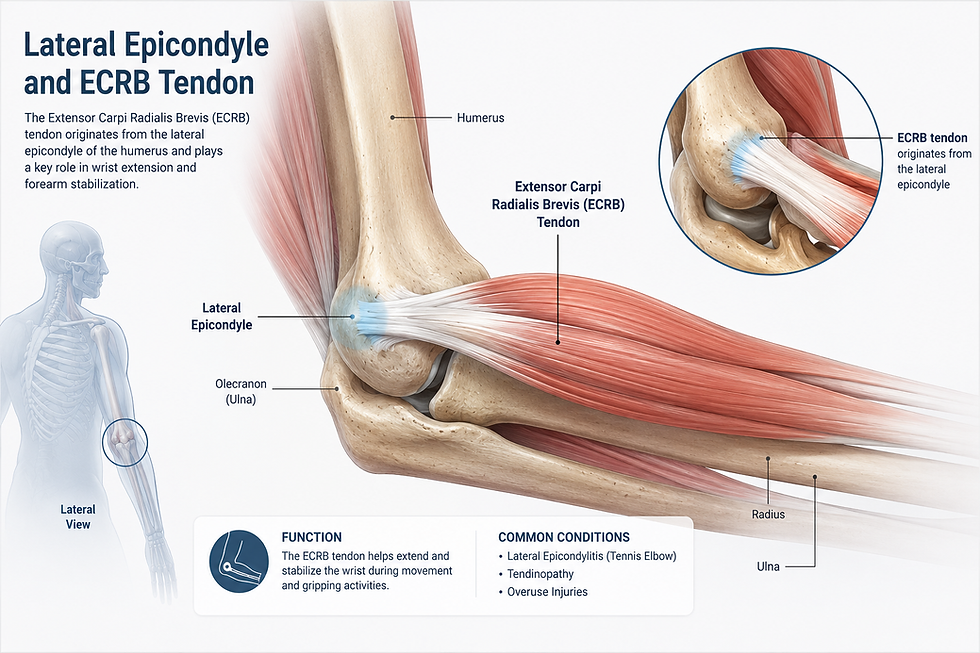
Tennis elbow is one of the most common overuse injuries affecting the outer side of the elbow. Despite its name, it doesn't only affect tennis players. It commonly develops in office workers, tradespeople, gym users, manual laborers, and anyone whose daily activities involve repetitive gripping, lifting, or wrist movements.
The good news is that most cases can be managed successfully at home. Recovery focuses on reducing excessive tendon strain while gradually rebuilding its strength through controlled exercises. Rather than complete rest, tendons heal best when exposed to the right amount of progressive loading.
This guide explains what tennis elbow is, how it develops, and a structured home recovery plan to reduce pain, restore strength, and help prevent recurrence.
Key Takeaways
Tennis elbow affects the common extensor tendon, particularly the Extensor Carpi Radialis Brevis (ECRB) tendon.
It is primarily a tendon overload condition rather than an inflammatory injury.
Complete rest alone is usually ineffective; controlled movement is essential.
Recovery follows a gradual progression: reduce load → restore movement → rebuild strength → return to activity.
Mild discomfort during rehabilitation is acceptable, provided symptoms settle within 24 hours.
Most people notice improvement within 6–12 weeks, although full recovery may take 3–6 months or longer.
Elbow straps may temporarily reduce pain during activity but should complement, not replace, rehabilitation.
What Is a Tennis Elbow?
Tennis elbow, also called lateral elbow tendinopathy, is an overuse injury affecting the tendon that connects the forearm extensor muscles to the outer part of the elbow (the lateral epicondyle).
The tendon most commonly affected is the Extensor Carpi Radialis Brevis (ECRB), one of the muscles that helps extend and stabilize the wrist during gripping.
Repeated overloading causes small structural changes within the tendon rather than acute inflammation, making it less able to tolerate everyday activities.
How Tennis Elbow Develops and Common Symptoms
Tennis elbow develops gradually when repetitive gripping, lifting, or wrist movements place more strain on the tendon than it can recover from. Common causes include using manual tools, lifting heavy objects, gym training with poor wrist control, racquet sports, and repetitive occupational tasks. The main problem is not the specific activity but the combination of repetition, force, and insufficient recovery.
Over time, the overloaded tendon develops structural changes, including disorganized collagen fibers and reduced strength, making it less able to tolerate gripping and lifting. Even though the pain is felt at the elbow, gripping activates the wrist extensor muscles, which pull on the injured tendon attached to the outer elbow. This is why complete rest alone is usually ineffective—tendons recover best with gradual, progressive loading.
Symptoms usually develop gradually and worsen during or after activity. Common signs include:
Pain on the outer side of the elbow
Pain during gripping, lifting, or wrist extension
Reduced grip strength
Difficulty opening jars or using tools
Forearm fatigue with repetitive tasks
Symptoms are often activity-related and tend to improve with rest.
Step-by-Step Home Recovery Plan for Tennis Elbow
Step 1: Reduce Load, Not Movement
The first goal is to reduce excessive stress on the tendon while maintaining normal, pain-tolerable use of the arm.
Temporarily reduce or modify:
Heavy lifting
Forceful gripping
Repetitive twisting movements
Racquet sports during painful flare-ups
Prolonged use of manual tools
Avoid complete immobilization, as tendons require some movement to maintain their capacity.
Step 2: Manage Pain During Flare-Ups
Ice may help reduce temporary discomfort after activities that aggravate symptoms, although it does not speed tendon healing.
Apply ice for 15–20 minutes.
Wrap ice in a cloth before applying.
Use after activities that increase pain.
If symptoms become significantly worse, temporarily reduce activity before gradually resuming exercises. Factors such as smoking, diabetes, and certain metabolic conditions may slow tendon healing.
Step 3: Restore Gentle Mobility
Once severe pain settles, begin gentle wrist mobility exercises.
Wrist Extensor Stretch
Extend the arm forward with the elbow straight.
Bend the wrist downward.
Use the opposite hand to apply gentle pressure.
Hold for 20–30 seconds.
Repeat 3–5 times.
Stretching should create a mild pulling sensation but should not increase pain significantly.
Step 4: Rebuild Tendon Strength (Most Important Phase)
Progressive strengthening is the most important part of recovery because it improves the tendon's ability to tolerate daily activities.
Isometric Wrist Extension (Early Stage)
Rest the forearm on a table.
Keep the wrist in a neutral position.
Push gently upward against resistance without moving the wrist.
Hold for 30–45 seconds.
Perform 5 repetitions, 1–2 times daily.
Isometric exercises can reduce pain while safely activating the tendon.
Progressive Wrist Strengthening
Once isometric exercises are comfortable, begin strengthening.
Wrist Extension
Hold a light weight (0.5–1 kg).
Slowly lift the wrist over 2–3 seconds.
Slowly lower over 2–3 seconds.
Perform 3 sets of 10–15 repetitions, every other day.
Grip Strengthening
Squeeze a soft ball or rolled towel.
Hold for 5 seconds.
Release slowly.
Perform 2–3 sets of 10–15 repetitions.
Once you can comfortably complete 3 sets of 15 repetitions with pain remaining within acceptable limits, increase the weight by approximately 0.25–0.5 kg.
Monitor Your Pain
A small amount of discomfort during exercise is normal. Aim to keep pain at 3–4 out of 10 or less, and ensure symptoms settle back to your usual level within 24 hours. If pain remains significantly worse the next day, reduce the intensity or volume of your exercises.
Step 5: Consider Supportive Devices
Counterforce Elbow straps or braces may temporarily reduce tendon strain during activities by:
Reducing stress on the ECRB tendon
Improving comfort during gripping
Allowing better function during rehabilitation
Elbow straps or braces help manage symptoms but do not repair the tendon. They should be used alongside a strengthening program and gradually phased out as symptoms improve.
Recovery Timeline
Recovery varies depending on symptom severity, duration, and adherence to rehabilitation.
Phase | Timeframe | Primary Focus |
Acute | 0–2 weeks | Pain control and load reduction |
Early Recovery | 2–6 weeks | Mobility and isometric exercises |
Strengthening | 6–12 weeks | Progressive resistance training |
Return to Function | 3–6 months | Gradual return to normal activities |
Many people experience meaningful improvement within 6–12 weeks, although full recovery may take several months.
Daily Habits to Prevent Recurrence
Reducing repetitive tendon overload lowers the risk of symptoms returning.
Helpful strategies include:
Keep the wrist in a neutral position while typing.
Use an ergonomic keyboard and mouse if needed.
Avoid prolonged forceful gripping.
Take regular breaks during repetitive work.
Use both hands when lifting heavier objects.
Increase training or workload gradually.
Small changes in daily habits can significantly reduce tendon stress over time.
When to Seek Professional Help
Consult a healthcare professional if:
Pain persists beyond 6–8 weeks despite rehabilitation.
Grip strength continues to worsen.
Daily activities become increasingly difficult.
Symptoms interfere with sleep.
Numbness or tingling develops.
Seek prompt medical evaluation if you experience:
Significant swelling after an injury
Inability to move or straighten the elbow
Fever, redness, or warmth around the joint
Sudden severe weakness following trauma
These symptoms may indicate a different condition requiring further assessment.
Conditions That Can Mimic Tennis Elbow
Outer elbow pain is not always caused by tennis elbow. Similar symptoms can occur with:
Radial tunnel syndrome
Cervical spine nerve irritation
Elbow osteoarthritis
Elbow ligament injuries
Referred pain from the shoulder or neck
An accurate diagnosis helps ensure appropriate treatment.
Final Summary
Tennis elbow is a tendon overload condition affecting the outer elbow, particularly the Extensor Carpi Radialis Brevis (ECRB) tendon. Recovery is most successful when excessive tendon strain is reduced while gradually rebuilding strength through progressive loading.
Successful rehabilitation usually follows four stages:
Reduce excessive load → Restore movement → Rebuild tendon strength → Gradually return to full activity.
With consistent rehabilitation, good load management, and gradual progression, most people regain normal function without surgery.
Frequently Asked Questions
How long does a tennis elbow take to heal at home?
Many people notice improvement within 6–12 weeks, although full recovery often takes 3–6 months, depending on symptom severity and consistency with rehabilitation.
Should I completely rest my arm?
No. Complete rest may reduce tendon capacity. Gentle movement combined with progressive strengthening generally produces better long-term outcomes.
What is the best exercise for tennis elbow?
Isometric wrist extension is often the best early exercise because it can reduce pain while safely activating the tendon. As symptoms improve, progressive resistance exercises become the cornerstone of rehabilitation.
Can tennis elbow heal without treatment?
Some mild cases improve over time, but structured rehabilitation usually leads to faster recovery and lowers the chance of symptoms returning.
When should I see a doctor?
Seek medical advice if symptoms persist beyond 6–8 weeks, grip strength worsens, numbness develops, or pain significantly limits your daily activities.


Comments